26 September, 2026
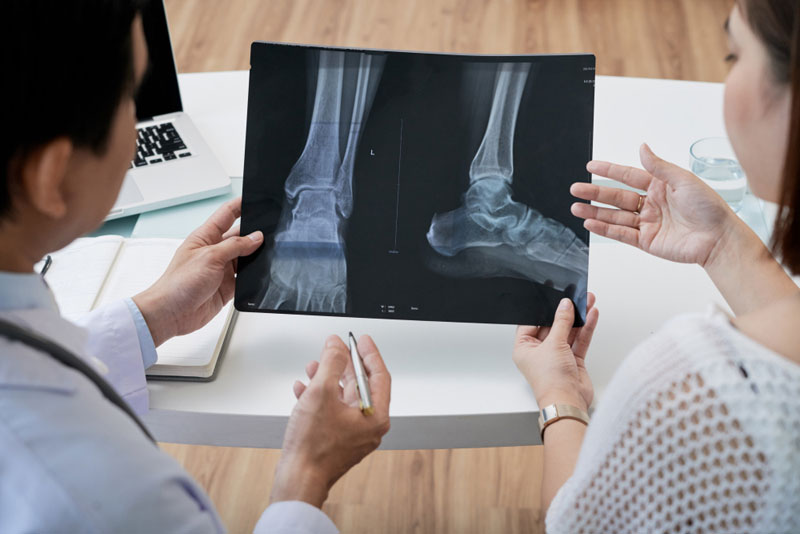
Bone pain in a teen or young adult can be easy to miss. It can feel like a sports injury, a pulled muscle or even growing pains. But it’s worth checking out if the pain keeps coming back or is accompanied by swelling.
One of the conditions that doctors may considered in such cases is osteosarcoma. It is a rare type of bone cancer and mainly affects teenagers and young adults.Understanding the signs and getting the right evaluation can help patients reach the right treatment sooner.
What Is Osteosarcoma?
Osteosarcoma is a type of cancer that begins in your bone. It is seen more often during the teenage years and early twenties, when bones are growing rapidly.It usually develops in the long bones of the knee but can also develop in the thigh bone and upper arm.Hearing that a young person might have bone cancer is scary for families. Knowing what to look for and having the condition properly evaluated can help you plan treatment.
What Are the Common Symptoms?
Symptoms of osteosarcoma may at times resemble those of a simple injury, hence can beinitially overlooked.
Common signs are:
- Ongoing bone pain
- Pain which may increase at night or after activity
- Swelling in the affected area
- Lameness or difficulty in using the affected limb
- Pain that recurs despite rest or usual treatment
If a young person has ongoing bone pain or swelling without a clear reason, it is better not to keep ignoring it.This does not mean that every case of bone pain is cancer. There can be many other causes. But persistent or unusual symptoms deserve proper medical evaluation.
How Is Osteosarcoma Diagnosed?
If a bone tumor is suspected, then X-ray is one of the first tests that is advised. Depending on what your doctor finds, an MRI or CT scan may also be advised.Biopsy may be needed to confirm whether yourtumor is cancerous or not. During a biopsy, a small tissue sample is examined to know the type of tumor.Doctors also need to find out whether the cancer has spread to other parts of your body. Particularlywhether it has spread to your lungs. Knowing the stage and extent of the diseasehelps the medical team decide on the most suitable treatment plan.
How Is Osteosarcoma Treated?
Treatment for osteosarcoma usually involves a combination of chemotherapy and surgery both.You may also have chemotherapy after surgery, but it can also be given before surgery to help treat the cancer. Surgery is then used to remove the tumor.In many cases, there may be limb-salvage surgery, where doctors remove the tumor but attempt to save the limb involved. Depending on the location and extent of the tumor, reconstruction may also be needed.
Amputation was more commonly used in the past for some bone cancers. Today, limb-saving surgery is possible in many patients, although the right approach depends on the individual tumor and whether the limb can be safely preserved.
Radiotherapy is used less often for osteosarcoma but may be considered in situations where surgery cannot be performed.
Why Early Evaluation of Osteosarcoma is important?
Osteosarcoma can be aggressive, so delaying the evaluation of persistent symptoms is not a good idea.The result depends on several factors, including the stage of the disease and whether it has spread. When the cancer is found while it is still limited to the bone, treatment can be more manageable than when it has already spread.For this reason, unexplained bone pain, swelling or a recurring limp in a young person should not simply be assumed to be a sports injury or growing pain.
Why Book an Appointment with Dr. Love Kapoor?
A suspected bone tumor can leave both the patient and family with many questions. Getting evaluated by an Orthopaedic Oncologist can help in understanding the condition and planning the treatment.
Dr. Love Kapoor is an expert in treating bonetumors and complex musculoskeletal cancers. His services include limb-salvage surgery, tumor prosthesis or megaprosthesis surgery, biological reconstruction, complex tumor reconstruction and treatment of pediatric bone tumors.
For a young person facing osteosarcoma, treatment is not only about removing the tumor. Whenever it is medically safe, preserving the limb and its function can also be an important part of the treatment plan.
Persistent bone pain deserves attention. Visit us today!
Category:
Osteosarcoma
Tags:
Osteosarcoma Diagnosed
Osteosarcoma in teenagers
Osteosarcoma in Young Adults
 +91 93558 33005