14 October, 2026
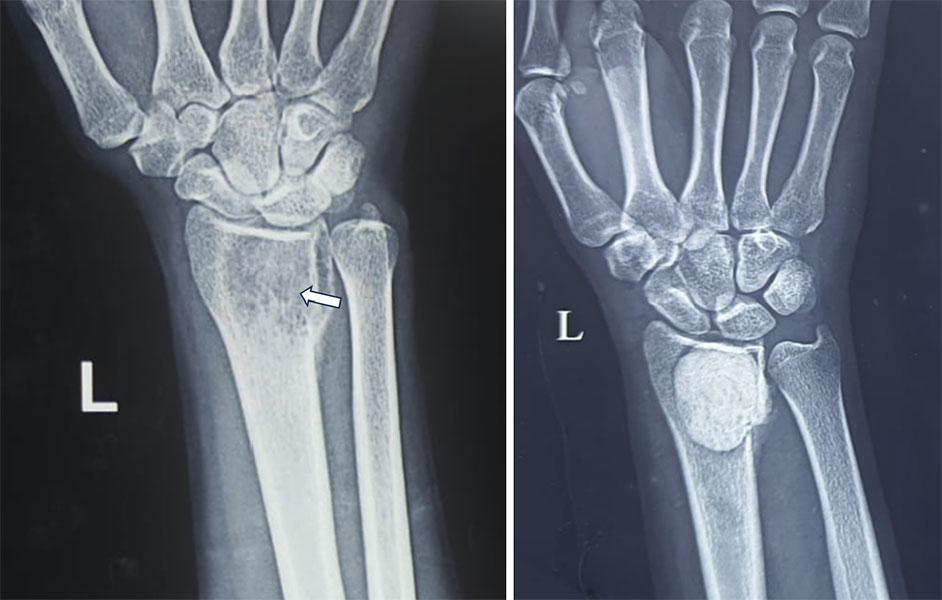
One of the first questions many patients ask after being diagnosed with a Giant Cell Tumor of Bone (GCTB) near the knee, wrist, hip or shoulder is:
Will I need a joint replacement?
The answer is: not necessarily.
In selected patients, Giant Cell Tumor of Bone can be treated by removing the tumor from within the bone while preserving the patient’s natural joint. This procedure is generally called curettage.
However, curettage is not suitable for every tumor. When the tumor has extensively destroyed the bone, significantly involved the joint, extended into surrounding soft tissues, or returned after previous treatment, wide resection may be necessary. This can sometimes require reconstruction with a tumor prosthesis or another form of joint reconstruction.
The decision is therefore not simply about avoiding a joint replacement. It is about achieving appropriate tumor control while preserving the best possible function.
What Is Curettage?
Curettage means removing the tumor from inside the affected bone while leaving the surrounding bone and joint intact whenever this can be done safely.
The surgeon creates an opening in the bone and removes the visible tumor tissue from the cavity. The cavity is then thoroughly cleaned, often using techniques such as a high-speed burr and other local measures depending on the individual case.
Once the tumor has been removed, the resulting cavity needs to be reconstructed. Depending on the size and location of the defect, this may involve:
- Bone graft
- Bone cement
- Internal fixation when required
- A combination of reconstructive techniques
The major advantage is that the patient’s own joint can potentially be preserved. This can be particularly valuable in young patients with GCTB around the knee, wrist or other major joints.
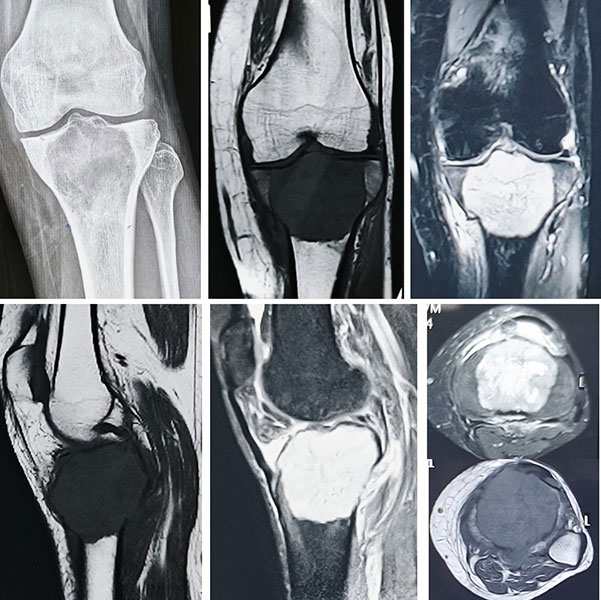
Figure 1A. X-rays and MRI showing a giant cell tumor in the upper end of the tibia around the knee.
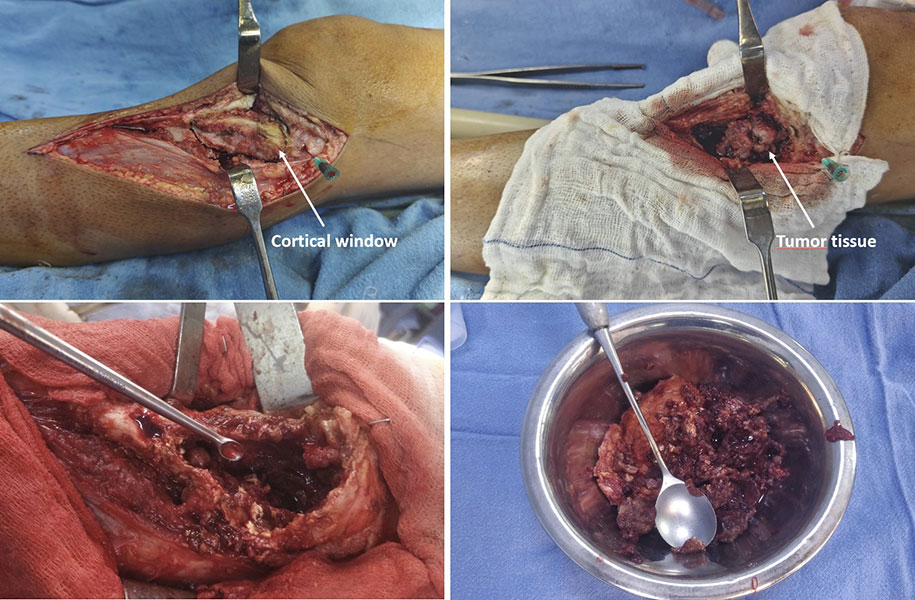
Figure 1B. Surgical exposure of a giant cell tumor with creation of a cortical window to access and remove the tumor.
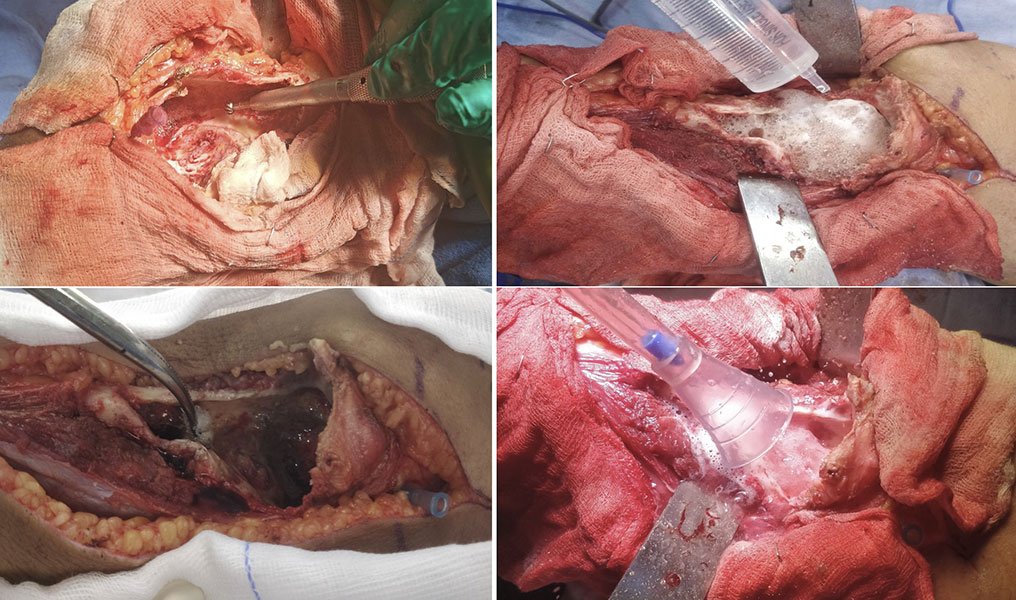
Figure 1C. Extended curettage using a high-speed burr, appropriate local adjuvants and thorough lavage to reduce the risk of residual tumor cells.
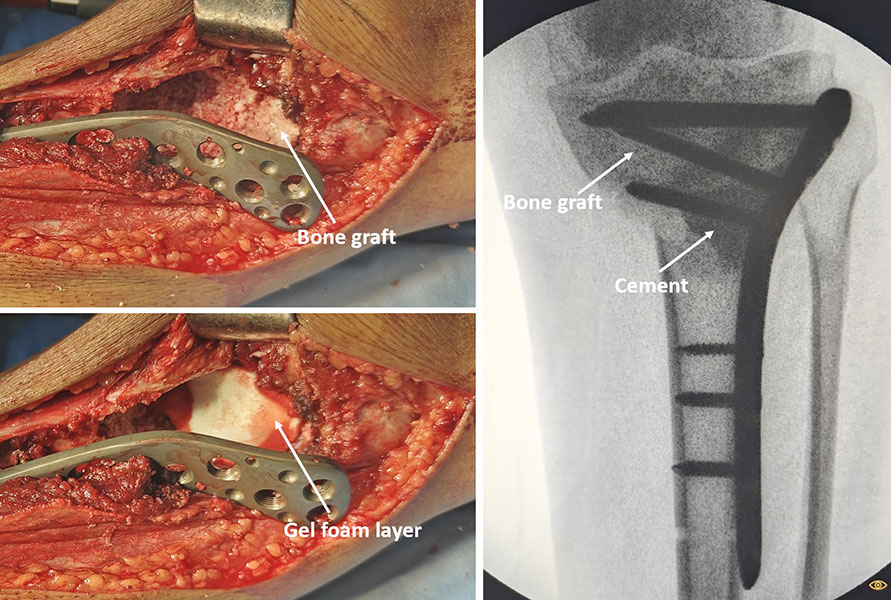
Figure 1D. Reconstruction of the bone defect after curettage using bone cement and bone graft, secured with appropriate fixation when required.
Why Is Joint Preservation Important?
For a young patient, preserving the natural joint can have significant functional advantages.
When curettage is successful, the patient retains the original joint rather than requiring removal of the joint and replacement with a prosthesis.
Studies comparing the two approaches have generally found better functional outcomes following curettage in appropriately selected patients. A recent long-term study reported higher functional scores in patients treated with intralesional curettage compared with wide resection for lower-limb GCTB.
However, preserving the joint should never come at the expense of adequate tumor control.
The important question is therefore:
Can this tumor be safely removed while preserving the joint?
—not simply: “Can I avoid a joint replacement?”
When Is Curettage More Suitable?
Curettage is generally considered when the tumor can be adequately removed while maintaining enough healthy bone and joint structures to preserve function.
Factors that may support a joint-preserving approach include:
- The tumor remains amenable to complete intralesional removal
- The articular cartilage is relatively preserved
- The structural integrity of the bone can be restored
- There is limited or manageable soft-tissue extension
- The tumor has not extensively destroyed the joint
- Adequate reconstruction can be achieved after tumor removal
The exact criteria vary according to the location and individual characteristics of the tumor.
For example, some tumors around the knee with substantial bone destruction can still be treated with extended curettage if enough structural bone and the joint surface can be preserved. Studies of locally advanced GCTB have shown that carefully selected patients can undergo extended curettage without a significant difference in recurrence compared with resection, while potentially avoiding the functional consequences of more extensive surgery.
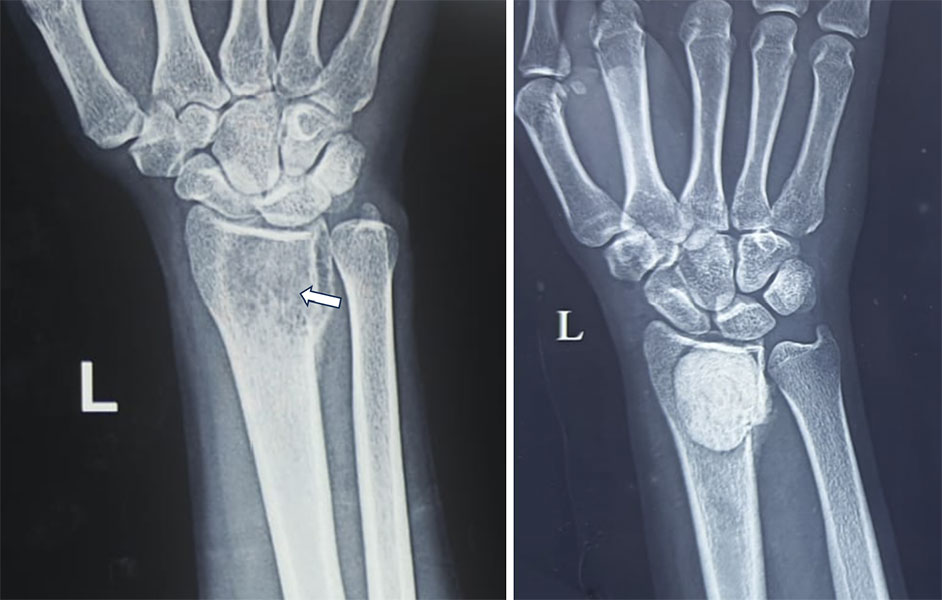
Figure 2. Extended curettage for a giant cell tumor of bone, followed by reconstruction of the resulting bone defect.
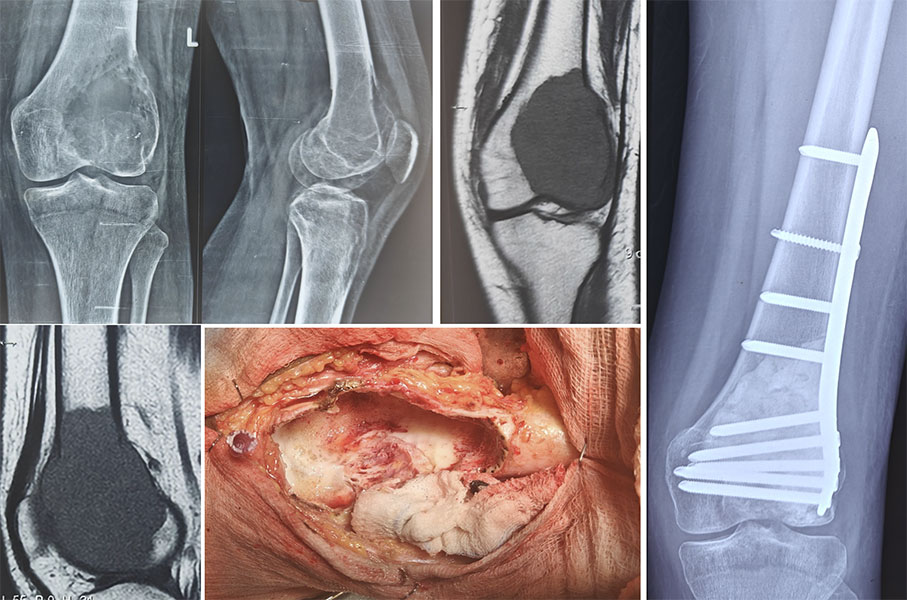
Figure 3. Giant cell tumor around the knee treated with extended curettage and bone cement reconstruction, preserving the native joint.
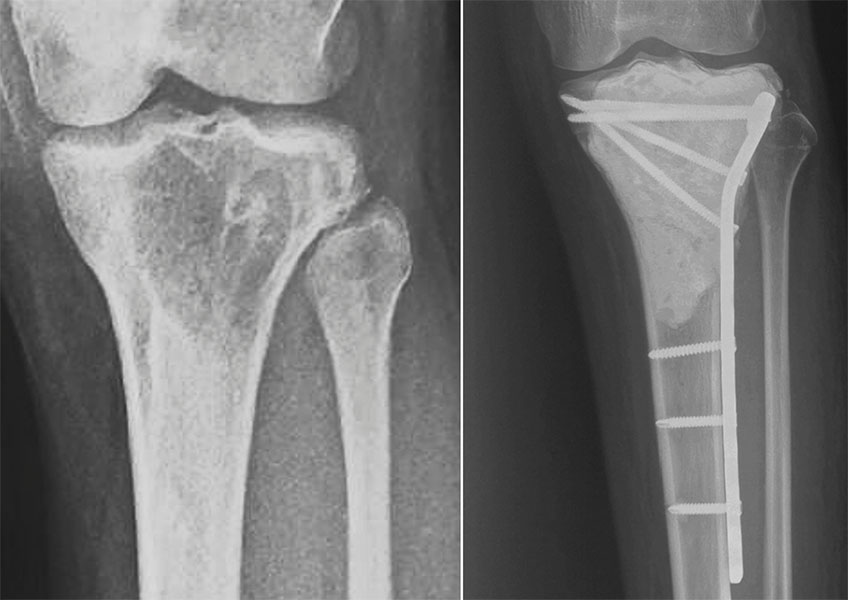
Figure 4. X-ray showing successful reconstruction after extended curettage and cementation of a giant cell tumor around the knee.
What Are the Limitations of Curettage?
The main concern with curettage is local recurrence.
Because the tumor is removed from inside the bone rather than removing the entire affected bone segment, microscopic tumor cells may remain.
The risk of recurrence varies considerably between patients and depends on factors such as tumor extent, soft-tissue extension, previous recurrence and the surgical technique used.
This does not mean that curettage is an inadequate treatment. Rather, it means that the decision to preserve the joint must be made in patients where adequate tumor removal is realistically achievable.
If recurrence occurs, it can sometimes be treated with another procedure. However, repeated recurrence can progressively destroy the bone and joint, making more extensive surgery necessary.
This is why regular follow-up after curettage is important.
What Is Wide Resection?
Wide resection, sometimes called en-bloc or segmental resection, involves removing the tumor together with the affected segment of bone.
Unlike curettage, the tumor is not simply scooped out from within the bone. The entire involved section is removed.
This approach can provide stronger local tumor control in appropriately selected aggressive tumors, but it creates a larger bone defect.
If the tumor is located near a major joint, removing the affected segment may also mean removing part or all of the joint.
Reconstruction may then require:
Therefore, wide resection can be an effective oncological operation, but it may come with greater functional consequences.
When Might Wide Resection Be Necessary?
Wide resection may be considered when preserving the joint would compromise adequate tumor removal.
Situations that may favor resection include:
- Extensive destruction of the bone
- Major involvement or destruction of the joint surface
- Extensive soft-tissue extension
- Inability to achieve adequate tumor removal through curettage
- Recurrent GCTB in a severely damaged bone
- A fracture or structural defect that cannot be adequately reconstructed while preserving the joint
- Certain aggressive tumors where the risk of recurrence after curettage is considered unacceptably high
The presence of a pathological fracture does not automatically mean that the joint must be sacrificed.
Research has shown that selected patients with GCTB and pathological fractures can sometimes undergo curettage with acceptable outcomes and better function than those undergoing resection. However, extensive soft-tissue extension, recurrent disease or inability to restore structural stability may shift the decision toward resection.
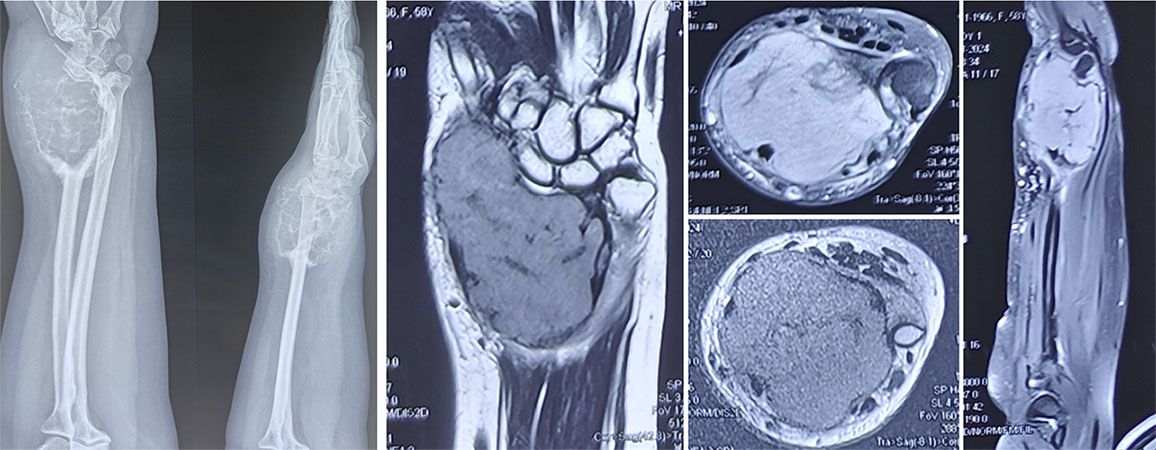
Figure 5A. A Grade 3 giant cell tumor of bone with extensive local bone destruction and soft-tissue involvement.
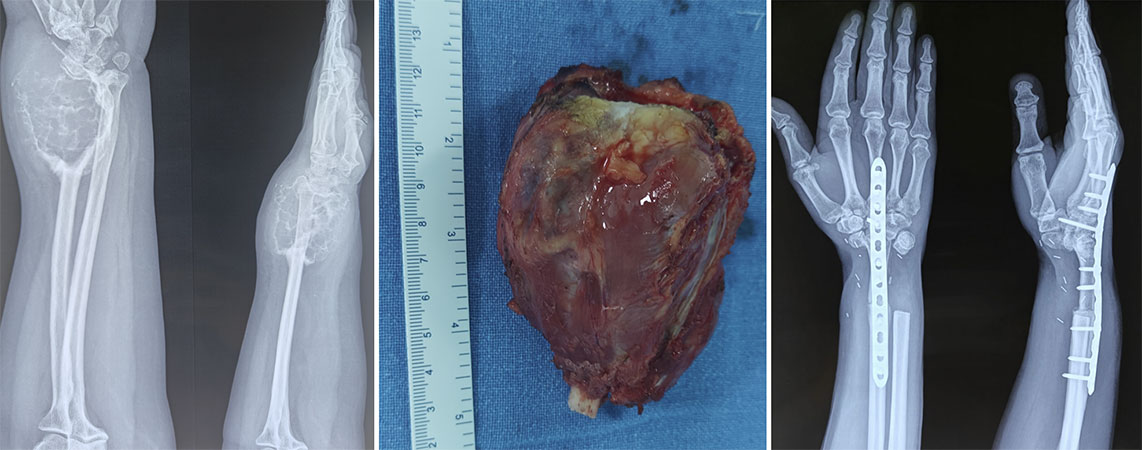
Figure 5B. Wide surgical resection of an extensive giant cell tumor of bone, removing the tumor along with the involved bone.
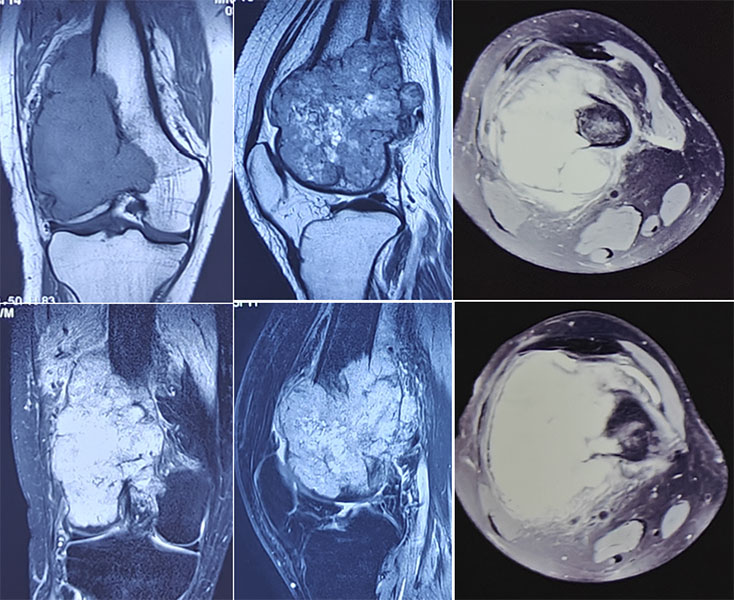
Figure 6A. Extensive bone destruction caused by a Grade 3 giant cell tumor around the knee, requiring more extensive surgical treatment.
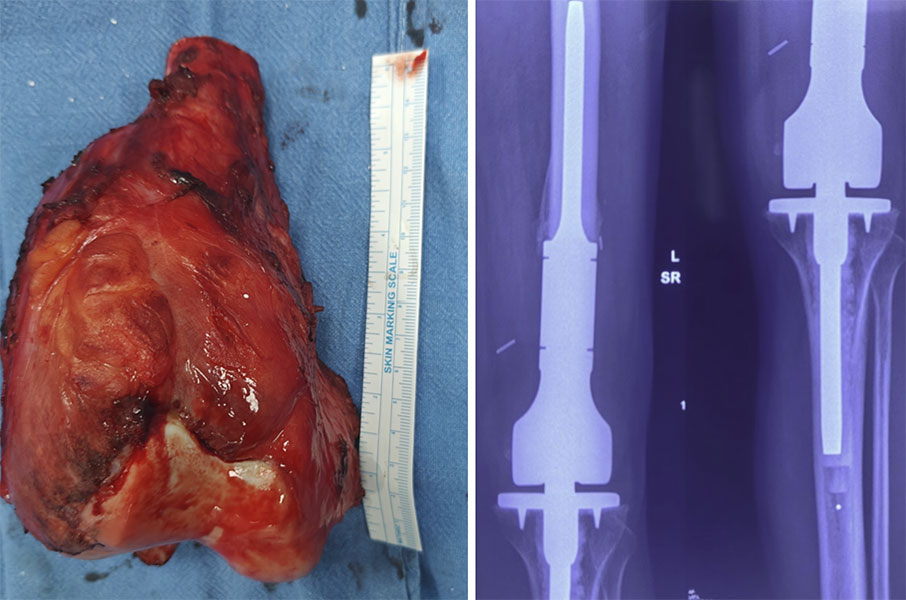
Figure 6B. Reconstruction after wide resection of a Grade 3 giant cell tumor using a knee endoprosthesis, allowing good knee movement and early walking.
Curettage vs Wide Resection: What Is the Difference?
These are broad principles rather than absolute rules. The appropriate procedure must be decided for the individual tumor.
What If the Tumor Has Already Destroyed Part of the Joint?
This is where treatment becomes more complex.
If the tumor has significantly damaged the joint surface but enough healthy anatomy remains, there may still be situations where joint-preserving surgery can be considered.
In other cases, attempting to preserve a severely damaged joint may result in poor function or inadequate tumor removal. In such circumstances, resection followed by reconstruction or a tumor prosthesis may provide a more reliable result.
This is why MRI and detailed preoperative imaging are so important. The surgeon needs to understand not only the size of the tumor but also the relationship between the tumor, joint surface, surrounding soft tissues and remaining healthy bone.
What About Denosumab Before Surgery?
Denosumab may be considered in selected advanced GCTB, particularly when surgery would otherwise be difficult or highly morbid.
However, its use before curettage requires careful consideration. Although denosumab can produce substantial changes in the tumor, studies have raised concerns about increased local recurrence following preoperative denosumab when curettage is subsequently performed.
Therefore, denosumab should not be viewed simply as a way to make every GCTB suitable for curettage. Its role needs to be individualized according to the tumor’s location, extent and planned surgical strategy.
The Goal Is Not Just to Avoid a Joint Replacement
Patients understandably want to preserve their natural joint. But the primary goal of treatment is effective tumor control.
A joint-preserving operation is valuable only when the tumor can be adequately removed and the remaining bone and joint can provide useful function.
In some patients, curettage may offer an excellent balance between tumor control and preservation of the natural joint. In others, wide resection and reconstruction may be the safer option.
The right question is therefore:
What treatment gives me the best balance between controlling my tumor and preserving useful function?
That answer is different for every patient.
Why Consult Dr. Love Kapoor for Giant Cell Tumor?
If you have been told that you have a Giant Cell Tumor near a major joint, it is natural to wonder:
- Can my joint be saved?
- Do I really need a tumor prosthesis?
- Is curettage enough for my tumor?
- What happens if the tumor comes back?
These questions cannot be answered from the diagnosis alone.
As an AIIMS-trained Orthopaedic Oncologist specializing in bone tumors and soft tissue sarcomas, Dr. Love Kapoor focuses on the diagnosis and surgical management of musculoskeletal tumors.
During consultation, the aim is to assess the tumor’s location, bone destruction, joint involvement, soft-tissue extension and structural integrity, and then discuss the surgical options appropriate for your individual situation.
Whenever it is oncologically safe and technically feasible, treatment can be planned with preservation of the natural joint and limb function in mind. If curettage is appropriate, the focus is on thorough tumor removal and appropriate reconstruction. If the tumor requires wide resection, reconstruction can be planned as part of the same treatment to restore the best possible function.
If you have been diagnosed with GCTB, have been advised a joint replacement, or want to know whether joint-preserving surgery may be possible in your case, a specialist orthopaedic oncology consultation can help you understand your options.
This article is intended for general educational purposes and does not replace an individual medical consultation, examination, imaging review or pathology assessment.
Category:
Giant Cell Tumor of Bone
Tags:
Bone Tumor Surgery
GCTB Curettage
Joint Preservation
Joint Replacement
 +91 93558 33005